
← Back to blog
Ontario's New Job Posting Rules: Some Missteps to Watch
Wage Gap
.png)
Ontario’s new job posting requirements under the Employment Standards Act, 2000 came into force on January 1 and apply to all workplaces with 25 or more employees. As I’ve been reviewing job postings over the past few weeks, a few patterns have emerged. Many employers are clearly trying to comply. Some are close, but not quite there.
Here are the top six issues I’m seeing.
1. Compensation Ranges: “From” and “Up To” Language

The ESA now requires employers to include expected compensation or a compensation range in job postings. The range cannot exceed $50,000.
Some postings list compensation as:
- “From $70,000”
- “Up to $120,000”
- “Starting at $65,000”
The problem is that this creates an open-ended range. It effectively sidesteps the legislated maximum spread.

It's helpful to remember why this rule exists. When compensation expectations are unclear, research consistently shows that equity-deserving groups receive lower starting pay. That initial gap compounds over time through raises, bonuses, and promotions.
Using “from” or “up to” language can recreate the very opacity the legislation is trying to address.
The range needs a clear floor and ceiling, with no more than a $50,000 spread.

2. “Canadian Experience Preferred”
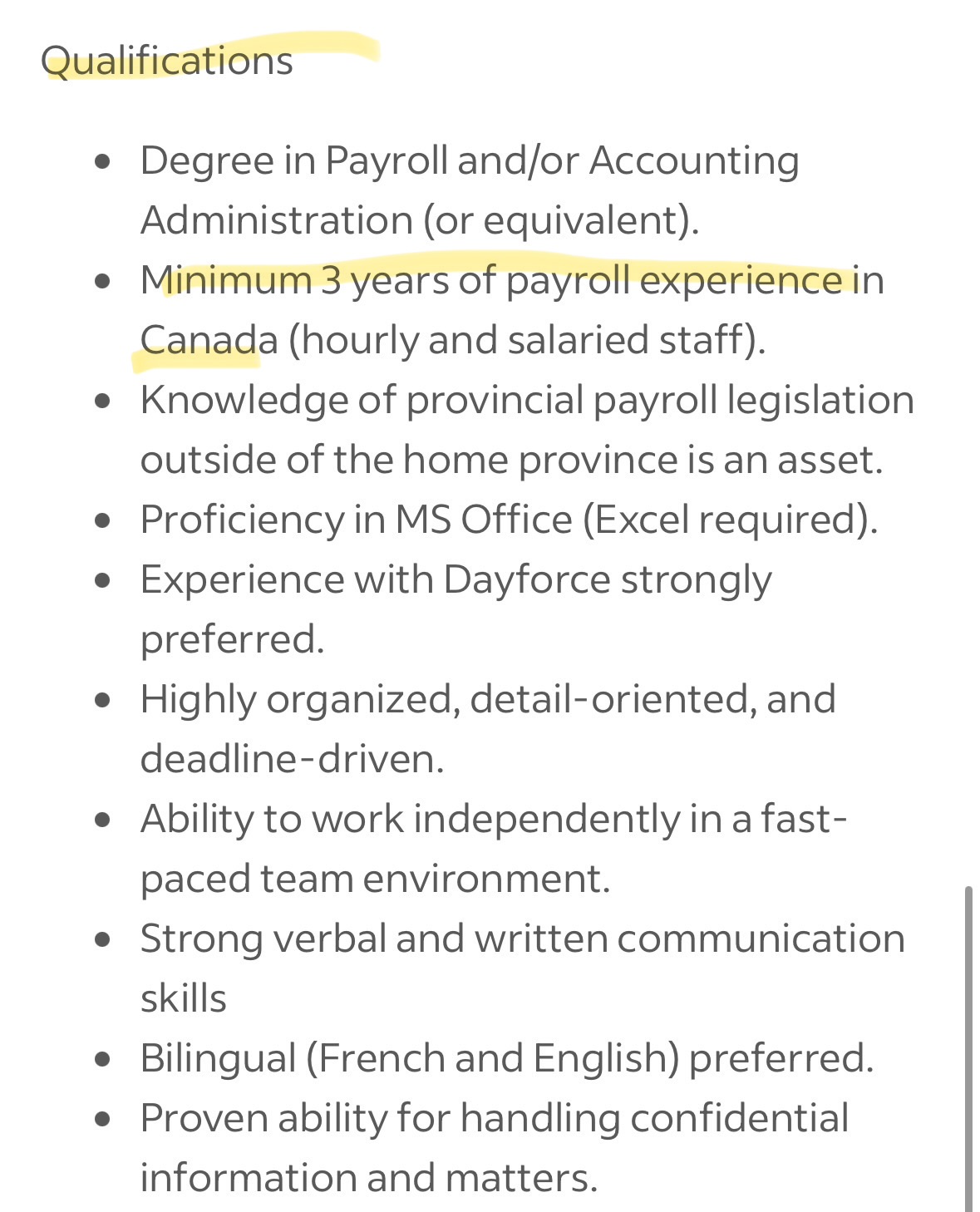
The new rules prohibit "requiring" Canadian experience.
Some postings are now listing “Canadian experience preferred” instead of “required.”
That may, but not necessarily, avoid breaching the ESA. But employers should also consider human rights law.
The Ontario Human Rights Commission has made clear that distinctions based on where work experience was obtained may be discriminatory on the grounds of race, ancestry, colour, place of origin, and/or ethnic origin, unless they meet the test for a bona fide occupational requirement.
Changing the word from “required” to “preferred” does not eliminate the underlying human rights risk.

3. Disclosure of Existing Vacancies
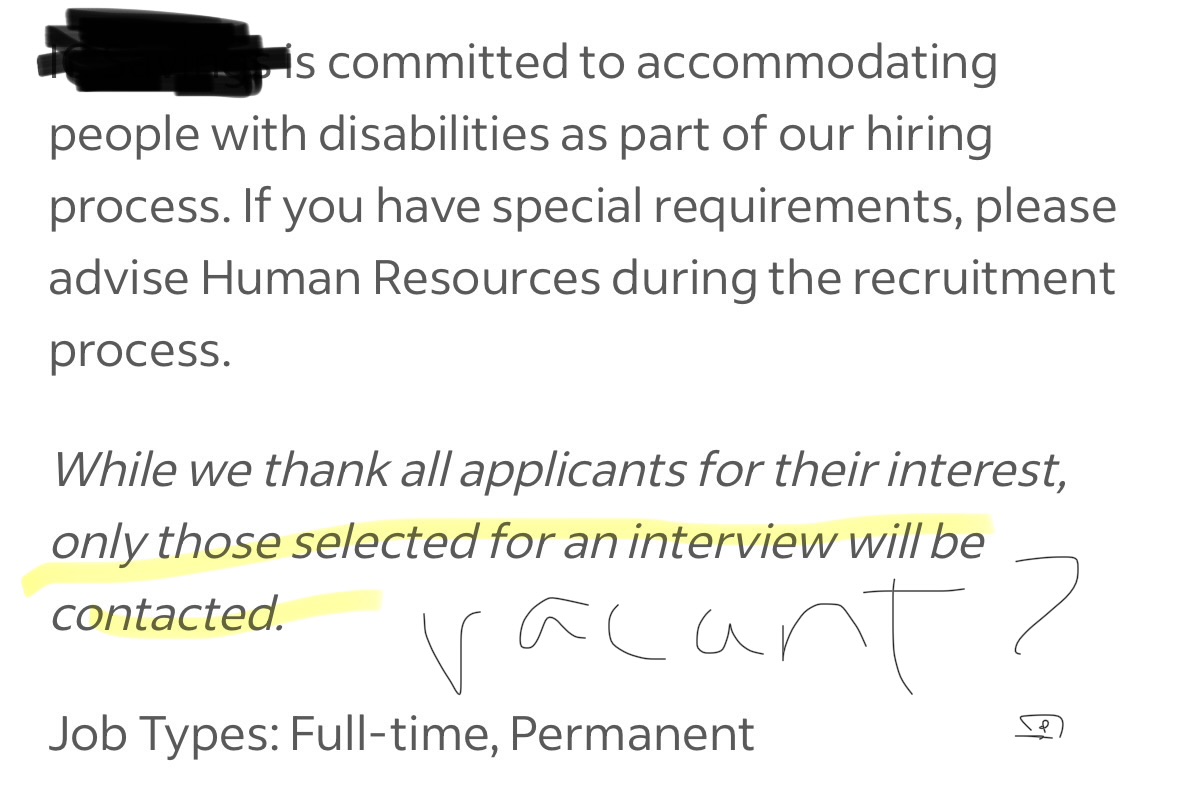
Employers are now required to disclose whether a posting is for an existing vacancy.
Some postings still include language such as:
“Only successful applicants will be contacted.”
That statement does not satisfy the vacancy disclosure requirement. It leaves open the possibility of so-called “ghost jobs,” where no active vacancy exists.
The intent of the legislation is to increase transparency and reduce misleading recruitment practices. The safest course is to state clearly whether the role is tied to an actual, current vacancy.
![Screenshot of job posting saying "only those who have been shortlisted for interviews will be contacted [heart emoji]"](https://cdn.prod.website-files.com/69243c4b2a816f684b491f41/69a0a427dac816bd8b794c8d_IMG_8709.jpeg)
4. Disclosure of AI in Hiring
Employers must now disclose the use of artificial intelligence in screening, assessment, or selection.
Many postings are silent on AI use.
Some silence may be legitimate. For example, smaller employers may fall below the 25-employee threshold, or AI tools may genuinely not be in use.
However, broader industry data suggests that a significant percentage (up to 88%) of companies use AI in some aspect of hiring. If AI tools are being used to screen resumes, assess video interviews, or rank candidates, that should be disclosed.
Beyond compliance, transparency about AI supports trust in the recruitment process and reduces later disputes about fairness.
5. Recruiting Firms Do Not Shift the Obligation
Another common misconception: using a smaller recruiting firm (i.e. one below the 25-employee threshold) does not remove the employer’s responsibility.
The job posting rules apply to the employer. If a third-party recruiter publishes a non-compliant posting, the employer may still face exposure.
Clear instructions and oversight are important. Employers should ensure that recruiting partners understand and apply the new requirements consistently.
6. Accessibility Statements (AODA)
While not part of the ESA amendments, accessibility statements under the Accessibility for Ontarians with Disabilities Act, 2005 (AODA) remain a requirement.
Many postings still omit them.
Accessibility language is not simply a formality. It informs the applicant that accommodation is available throughout the hiring process. When it is missing, it can discourage applicants who may already feel uncertain about disclosure.
Compliance Is Only the Starting Point
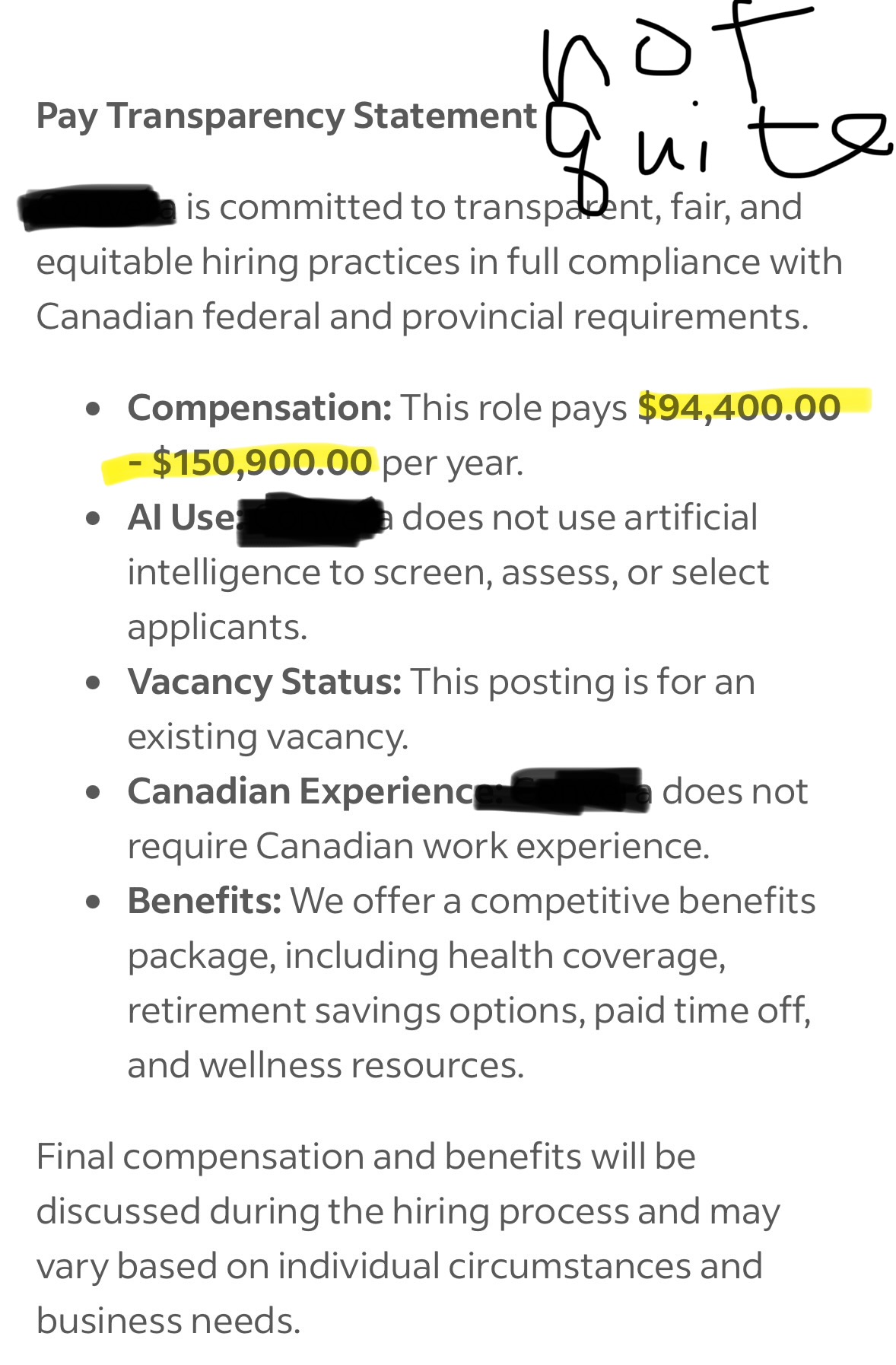
It’s clear from reviewing postings that many employers are acting in good faith, but they're still not getting it quite right.
But small drafting choices can create legal exposure and undermine the goals of transparency and fairness the legislation is designed to promote.
It's worth sitting down with employment counsel and conducting a careful review of job posting templates, recruiter instructions, and internal approval processes.
This isn't just about compliance. There is strong research showing that fair and transparent hiring practices expand access to the full talent pool. When compensation is clear, criteria are consistent, and systems are transparent, organizations are better positioned to attract and retain strong candidates.
Good structure reduces risk and strengthens the organization. The new job posting rules are an opportunity to revisit hiring systems more broadly and to build processes that are defensible, transparent, and aligned with long-term organizational goals.
A Handy Infographic

To make the new job posting requirements easier to navigate, I’ve created a clear, two-page information sheet summarizing the key obligations and common pitfalls.
You can download it here.
Need Help Reviewing Your Hiring Practices?
If you’re unsure whether your current job postings, templates, or recruitment processes align with the new requirements, it may be worth a careful review.
If you would like support reviewing your hiring strategy or ensuring compliance with Ontario’s job posting laws, you’re welcome to reach out through the contact form. I’m happy to discuss how I can assist.
.png)
.png)